Agentic AI in Digital Marketing | Autonomous Growth Explained
Before diving into Agentic AI , it’s important to understand the journey from simple automation to fully autonomous systems.
Traditional marketing automation allows marketers to schedule emails, manage ad campaigns, and track analytics with predefined rules. These systems are reactive—they follow instructions but can’t make independent decisions. They require constant human supervision to adjust strategies based on campaign performance.
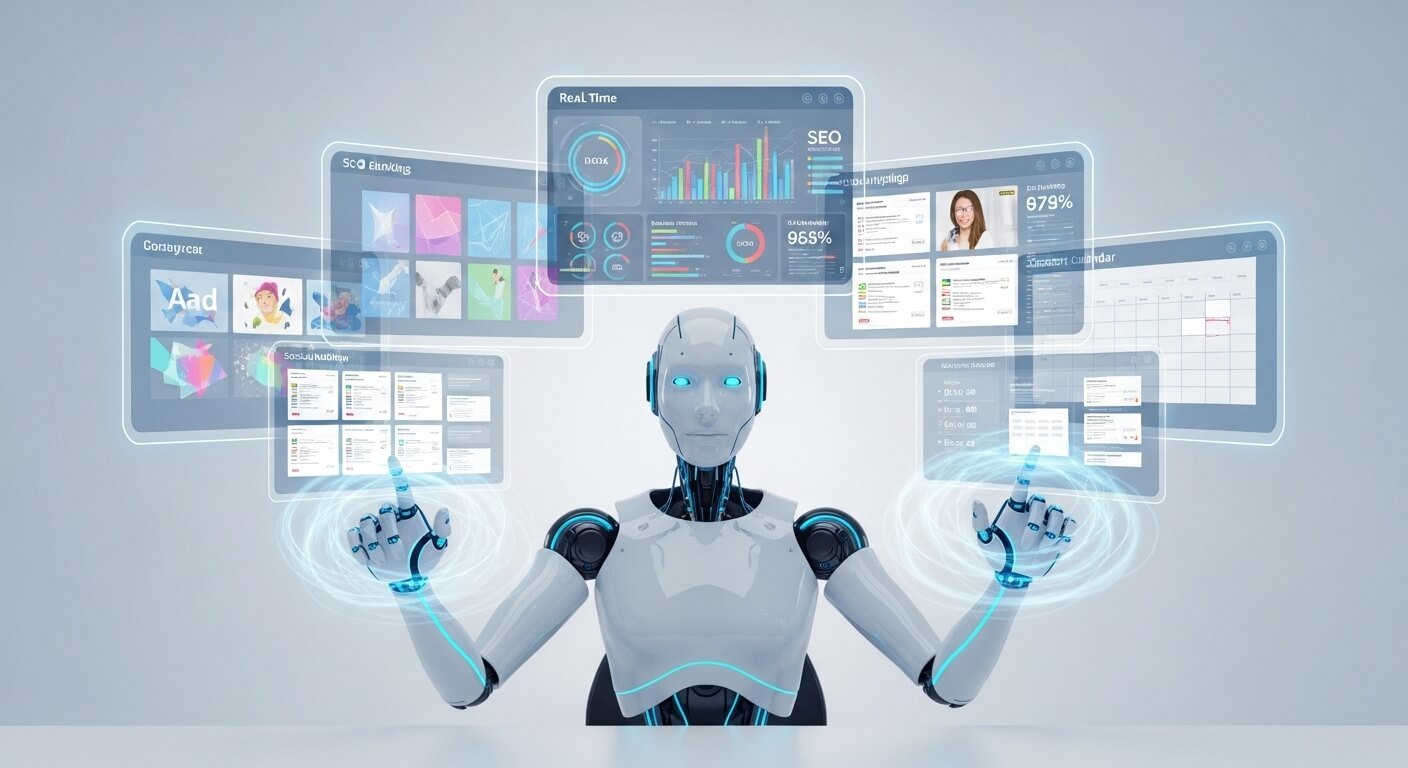
Enter Agentic AI in digital marketing. This technology uses autonomous AI agents that can observe outcomes, learn from data, and make decisions in real-time. Imagine a marketing system that can identify a drop in ad performance, reallocate budget, adjust creatives, and even personalize messaging for individual users—all without human intervention. This is not just efficiency; it’s intelligent autonomy, where AI acts like a strategic partner rather than a tool.
What Is Agentic AI?
Agentic AI in Digital Marketing is transforming how modern marketing operates. By combining autonomy, intelligence, and execution, AI agents can reshape how campaigns are managed, content is created, and customer experiences are personalized. Early adopters of Agentic AI in Digital Marketing are already seeing increased efficiency, improved ROI, and more scalable operations.
For businesses looking to stay ahead, the question is not if but when to adopt Agentic AI in Digital Marketing. Start small, experiment responsibly, and allow AI agents to take on repetitive, time-consuming tasks—freeing your teams to focus on strategy, creativity, and innovation in the digital marketing space.
The future is clear: from automation to autonomy, Agentic AI in Digital Marketing is redefining what’s possible in modern marketing.
Core Components of an Agentic AI System
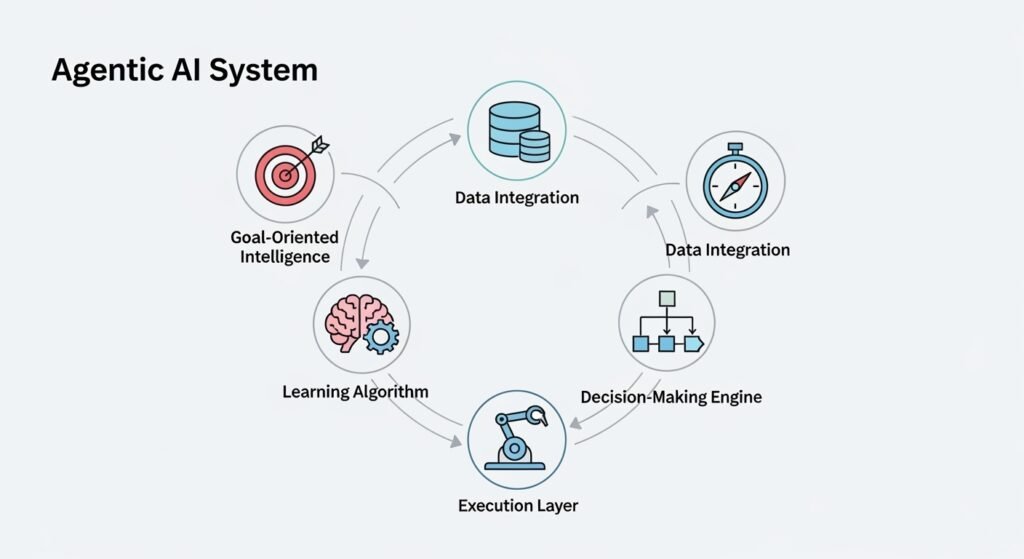
To understand how Agentic AI works, it’s helpful to break it down into its core components:
Goal-Oriented Intelligence: Every AI agent operates with specific objectives, whether increasing ad conversions, boosting organic traffic, or improving customer engagement.
Data Integration: Agentic AI pulls data from multiple sources—CRM systems, social media, website analytics, and ad platforms—to make informed decisions.
Learning Algorithms: These agents continuously learn from outcomes, adjusting their strategies to improve performance over time.
Decision-Making Engine: Combines predictions, historical data, and real-time insights to make autonomous decisions.
Execution Layer: Once a decision is made, the agent acts—launching campaigns, adjusting bids, or publishing content—without human intervention.
Together, these components allow Agentic AI systems to operate as self-sufficient marketing teams, handling complex workflows with minimal oversight.
Use Cases in Digital Marketing
Agentic AI in digital marketing is versatile and can transform almost every aspect of digital marketing. Some key use cases include:
Ads and Paid Campaigns
AI agents can monitor ad performance in real-time, automatically testing creatives, adjusting bids, and reallocating budgets to optimize ROI. For example, an e-commerce brand could have an AI agent running thousands of micro-campaigns across Facebook, Google, and TikTok, adjusting strategies dynamically based on performance metrics.
Search Engine Optimization (SEO)
AI agents can analyze search trends, optimize on-page content, generate meta tags, and even recommend internal linking strategies. Unlike traditional SEO tools, these agents execute SEO actions automatically, adapting to algorithm changes as they happen.
Content Marketing
From blog posts to social media updates, Agentic AI can generate, schedule, and distribute content tailored to audience preferences. It can also measure engagement and refine future content strategies autonomously, saving brands countless hours of manual planning.
Customer Relationship Management (CRM)
AI agents can personalize customer interactions, predict purchasing behavior, and trigger automated follow-ups at the right moment. They can manage customer journeys at scale, ensuring timely and relevant engagement that drives loyalty and conversions.
How Businesses Can Start Using Agentic AI Today
Integrating Agentic AI into your marketing strategy may sound complex, but it can be approached gradually:
Identify Repetitive Workflows: Start with areas like ad optimization, content generation, or email sequences that require frequent adjustments.
Choose the Right Tools: Look for AI platforms offering autonomous agent capabilities rather than just automation.
Start Small, Scale Gradually: Implement AI agents in a single campaign or channel, monitor results, and expand as confidence grows.
Combine Human Expertise: Agentic AI excels at execution, but humans provide strategic direction, creativity, and ethical oversight.
Measure Impact: Track metrics such as ROI, engagement, conversions, and time saved to validate AI agent effectiveness.
Even small-scale adoption can free up human teams to focus on strategy and creativity, while AI agents handle execution and optimization.
The Future Outlook: AI Agents Replacing Manual Workflows
Looking ahead, the role of AI agents in digital marketing is only set to expand. As AI becomes more sophisticated, businesses will increasingly rely on autonomous agents to manage:
Multi-channel marketing campaigns
Real-time customer engagement
Predictive personalization
Dynamic content and ad creation
Continuous optimization across platforms
The implications are profound: human marketers will shift from task execution to strategic oversight, guiding AI agents rather than performing repetitive work themselves. Agencies that adopt agentic AI early will gain a competitive edge, delivering faster, smarter, and more personalized campaigns at scale.
However, this evolution also brings responsibility. Brands must ensure ethical AI practices, data privacy compliance, and transparent decision-making. When implemented correctly, Agentic AI doesn’t replace humans—it empowers them, allowing marketers to focus on creativity, strategy, and customer relationships while AI handles the heavy lifting.
Conclusion
Agentic AI in digital marketing. By combining autonomy, intelligence, and execution, AI agents can transform how campaigns are managed, content is created, and customer experiences are personalized. Early adopters are already seeing increased efficiency, better ROI, and more scalable operations.
For businesses looking to stay ahead, the question is not if but when to adopt Agentic AI. Start small, experiment responsibly, and let AI agents take on the repetitive, time-consuming work, freeing your teams to innovate and lead in the digital marketing space.
The future is clear: from automation to autonomy, Agentic AI is redefining what’s possible in marketing.







Leave A Reply Now