Scaling a health app to 100K users in 2026 is not about going viral overnight. It is about building a predictable, data-driven growth engine that combines acquisition, activation, retention, and referral into one connected system.
Healthcare is one of the most sensitive and competitive industries in tech. Users do not download health apps casually. They download them because they want solutions—better sleep, weight loss, mental health support, chronic disease management, fertility tracking, teleconsultation, or performance optimization. That means your growth strategy must be rooted in trust, clarity, and measurable outcomes.
If you are wondering how to grow a healthcare app in 2026, the answer lies in combining smart positioning with multi-channel execution. Let’s break down what actually works in today’s market.
Define a Sharp ICP Before You Scale
Most healthcare startups fail to reach 100K users because they market to “everyone.” In 2026, specificity wins.
Your Ideal Customer Profile (ICP) should be so clear that your messaging feels personal. Are you targeting busy working mothers managing PCOS? Fitness-driven Gen Z users optimizing performance? Patients with chronic migraines? Remote-first professionals struggling with anxiety?
When scaling a healthcare startup in 2026, niche positioning accelerates growth. A focused audience allows you to:
Craft highly relevant messaging
Build community faster
Lower ad costs through precise targeting
Increase retention because the app feels built “just for them”
Broad messaging increases downloads but kills retention. And retention is what gets you to 100K active users—not just installs.
Health tech growth marketing strategies today begin with micro-niche dominance before expanding horizontally.
Build Authority-Driven Acquisition Channels
In 2026, attention is fragmented. Users are not just searching on Google—they are searching on TikTok, YouTube, Reddit, and AI-powered search engines.
If you want to scale a health app to 100K users, you need authority-driven acquisition channels.
Search remains powerful, especially for high-intent queries like “best app for managing anxiety naturally” or “weight loss tracking app for busy professionals.” Ranking for these long-tail keywords through SEO content builds sustainable, compounding traffic.
But SEO alone is slow.
Short-form video content on TikTok and Instagram Reels has become one of the fastest-growing health app user acquisition strategies. Educational, relatable, and story-driven content builds trust quickly. Users want to see real-life transformations, relatable struggles, and expert-backed tips.
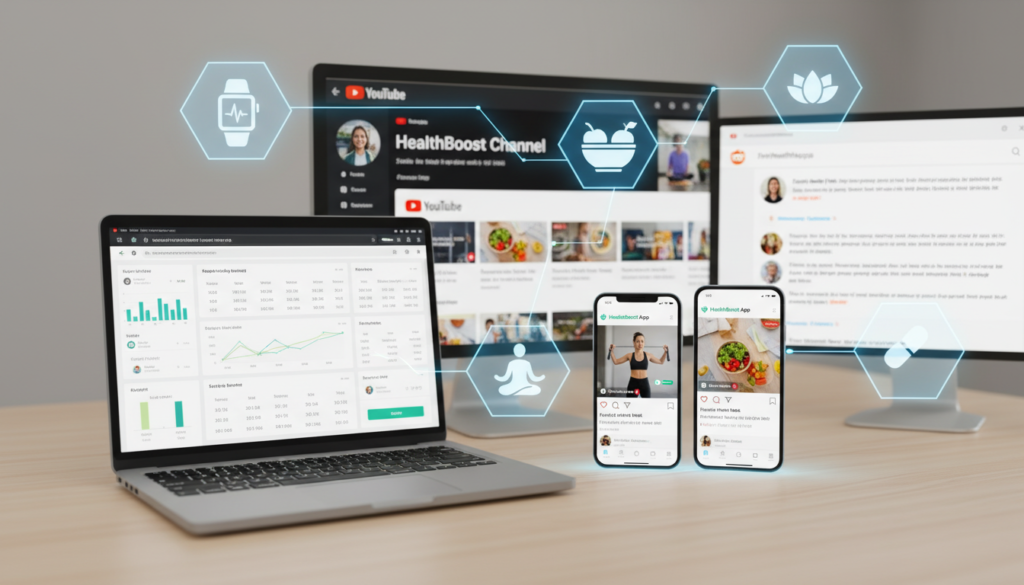
YouTube remains underrated for health apps. Long-form educational videos answering specific pain points build deep authority and funnel warm traffic to your app landing page.
What does not work in 2026 is generic social media posting without a content strategy. Random tips without narrative positioning rarely convert. Every piece of content should align with your ICP and guide users toward one action: download and try.
Paid Growth Frameworks That Actually Convert
Paid advertising is still powerful, but the rules have changed. Throwing money at broad Meta or Google campaigns rarely scales efficiently.
A high-performing health app user acquisition strategy in 2026 uses layered paid frameworks.
First, run problem-aware campaigns targeting users who already show intent. For example, targeting search terms related to specific symptoms or challenges can generate high-quality installs.
Second, build retargeting ecosystems. Most users will not download on the first interaction. Retargeting through short-form videos, testimonials, and educational sequences increases trust and conversion.
Third, optimize for activation—not just installs. Many apps burn budgets acquiring downloads but fail to guide users into meaningful first actions. Paid campaigns should connect directly to onboarding flows designed to trigger immediate value.
What does not work anymore is optimizing for cheapest install cost. Cheap users who churn within three days do not help you reach 100K engaged users.
In scaling healthcare startup 2026 environments, paid growth must connect tightly with onboarding psychology and retention triggers.
Design Retention Loops Before Scaling
You do not scale to 100K users through acquisition alone. You scale through retention loops.
If your app loses 40 percent of users within the first week, no marketing budget can fix that.
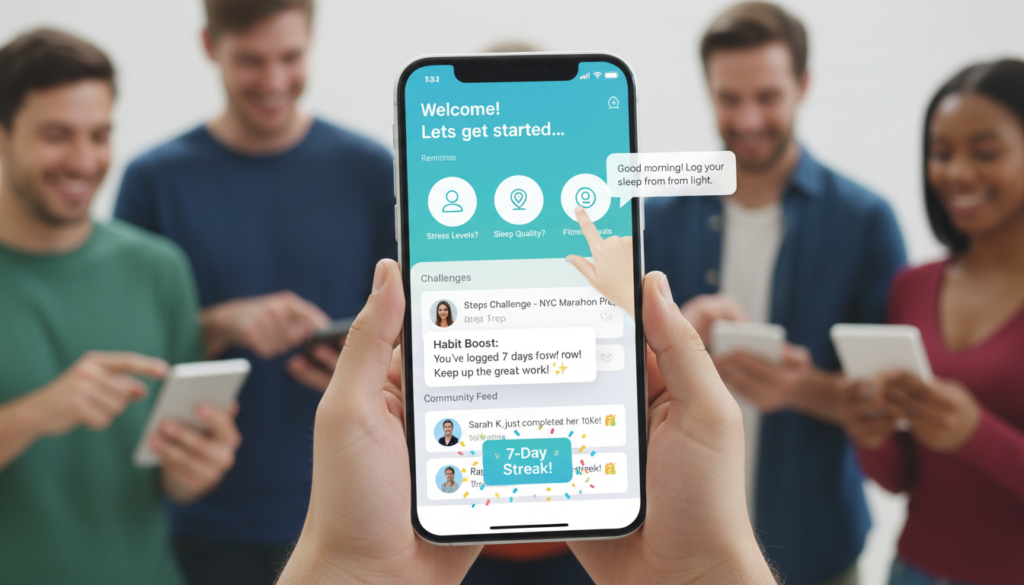
Retention begins with onboarding. In 2026, the best health apps personalize the experience immediately. Instead of showing generic dashboards, they ask simple guided questions to tailor the journey.
For example, a mental health app might ask about stress levels, work environment, or sleep patterns to customize recommendations. A fitness health app might assess goals and schedule constraints before building a plan.
Once personalization is set, habit-forming triggers matter. Push notifications should be contextual and helpful, not annoying. Daily reminders should align with user goals.
Community integration is another powerful retention strategy. Users stay longer when they feel part of something. Group challenges, progress sharing, and milestone celebrations increase emotional investment.
Health tech growth marketing strategies in 2026 prioritize engagement metrics such as weekly active usage, completion rates, and referral actions—not just total downloads.
Retention creates growth momentum.
Referral Systems That Multiply Growth
One of the most underrated growth levers for health apps is structured referral design.
People naturally share tools that improve their lives. But sharing rarely happens automatically. You must engineer it.
A referral system should feel rewarding and aligned with user motivation. For example, offering premium access days, personalized insights, or bonus features for inviting friends works better than generic discount codes.
The key is timing. Asking for referrals too early reduces response rates. The best moment to prompt sharing is after a user achieves a visible milestone—completing a program, reaching a goal, or experiencing a measurable improvement.
Influencer authority also plays a significant role in 2026. Micro-influencers in niche health categories often outperform celebrity endorsements. A fitness coach with 20,000 deeply engaged followers can drive more meaningful downloads than a broad lifestyle influencer.
Partnerships with health educators, wellness coaches, and medical content creators build credibility and targeted growth.
If you are asking how to grow a healthcare app sustainably, referral systems must be part of your core design—not an afterthought.
Multi-Channel Scaling & Data Intelligence
Once acquisition and retention systems are validated, scaling to 100K users requires multi-channel integration.
Relying on one traffic source is risky. Algorithm shifts can disrupt growth overnight.
In 2026, high-performing healthcare startups combine:
SEO-driven educational content
Short-form video authority
Influencer collaborations
Paid acquisition
Email lifecycle marketing
Push notification sequences
Community-driven engagement
AI-powered analytics tools now help identify which channels produce the highest lifetime value users. Instead of guessing, growth teams analyze cohort behavior, retention curves, and revenue contribution per channel.
Scaling healthcare startup 2026 models rely on predictive data. AI can forecast churn risk and trigger personalized engagement campaigns before users drop off.
What does not work anymore is vanity metrics obsession. Large follower counts or app installs mean little without sustained engagement.
True scale comes from optimizing for lifetime value, not just acquisition volume.
Build a Growth Engine, Not Just Campaigns
Reaching 100K users is not about one viral moment. It is about building a growth engine.
Your engine includes:
Clear ICP positioning
Authority-based content
High-converting onboarding
Retention loops
Referral multipliers
Multi-channel scaling
AI-driven optimization
Each element supports the others.
When acquisition feeds into strong activation, activation feeds into retention, and retention feeds into referrals, growth compounds naturally.
Health app user acquisition strategy in 2026 is more strategic than ever before. Users are selective. Competition is intense. Trust is essential.
The health apps that scale are those that combine empathy with data, personalization with performance, and authority with automation.
If you are building or scaling a healthcare app, focus on depth before scale. Validate retention before expanding budgets. Build trust before chasing virality.
Because in 2026, sustainable growth is smarter growth—and that is what gets you to 100K users and beyond.







Leave A Reply Now